

May Issue No.1
Where to go, what to see, and who to hear — your guide to what’s happening across Southern Ontario

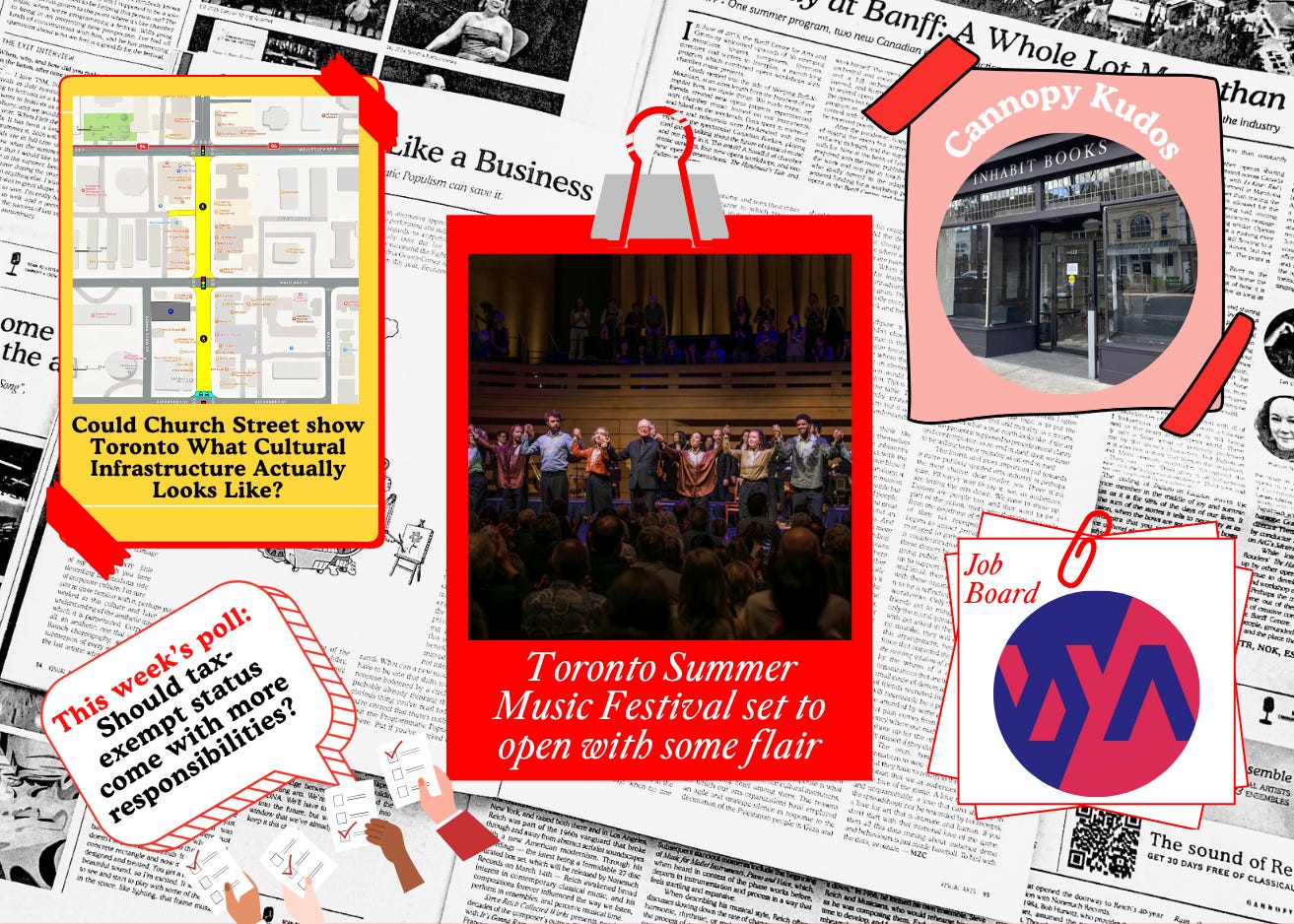
Southern Ontario’s arts landscape is beginning to spill beyond the walls that usually contain it. In this issue, we look at what happens when culture moves into the street, from the proposed pedestrianisation of Church Street to exhibitions and performances exploring memory, visibility, movement, and collective space. Elsewhere, we spotlight Toronto Summer Music’s opening night with Les Arts Florissants, revisit Beethoven’s Pastoral Symphony through the tactile rituals of vinyl listening, and celebrate the work of a bookstore-cum-gallery in this issue’s Cannopy Kudos. As always, consider this your guide not only to what’s happening across Ontario’s cultural landscape, but to the kinds of public life artists are still fighting to make possible.


Cast your vote in this week’s poll:
Last issue, writer Samir Jaffer argued that Toronto’s arts crisis may not stem from a lack of venues, but from a failure to rethink the spaces we already have. From churches and community halls to heritage buildings that sit empty for much of the week, the city is filled with underused spaces that could host concerts, exhibitions, and performances. As artists continue to face rising rents and shrinking access to affordable venues, the conversation raises a sharper question: if institutions receive public benefits like tax exemptions, should they also carry a greater obligation to serve the cultural life of their communities?
Results from our previous poll:
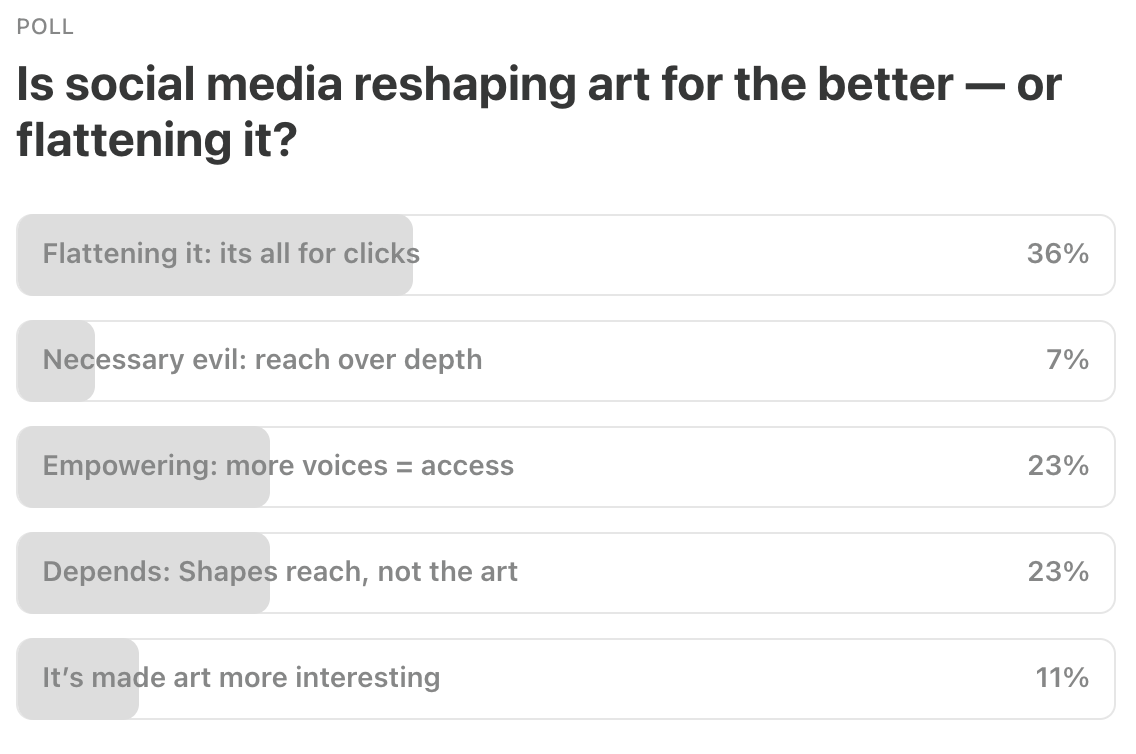
Despite 11% of you suggesting that social media has made art more interesting, the results of this poll suggest audiences are increasingly skeptical of the algorithmic turn in contemporary culture. While social media has undeniably democratized exposure and expanded access for artists, the dominant response — “Flattening it: it’s all for clicks” — reflects a growing anxiety that visibility is beginning to outweigh depth. As explored in Keena Al-Wahaidi’s recent Cannopy op-ed on “Instagrammable” art, the question is no longer whether social media influences art, but whether art can still resist being shaped by the malignant and insatiable logic of the feed.


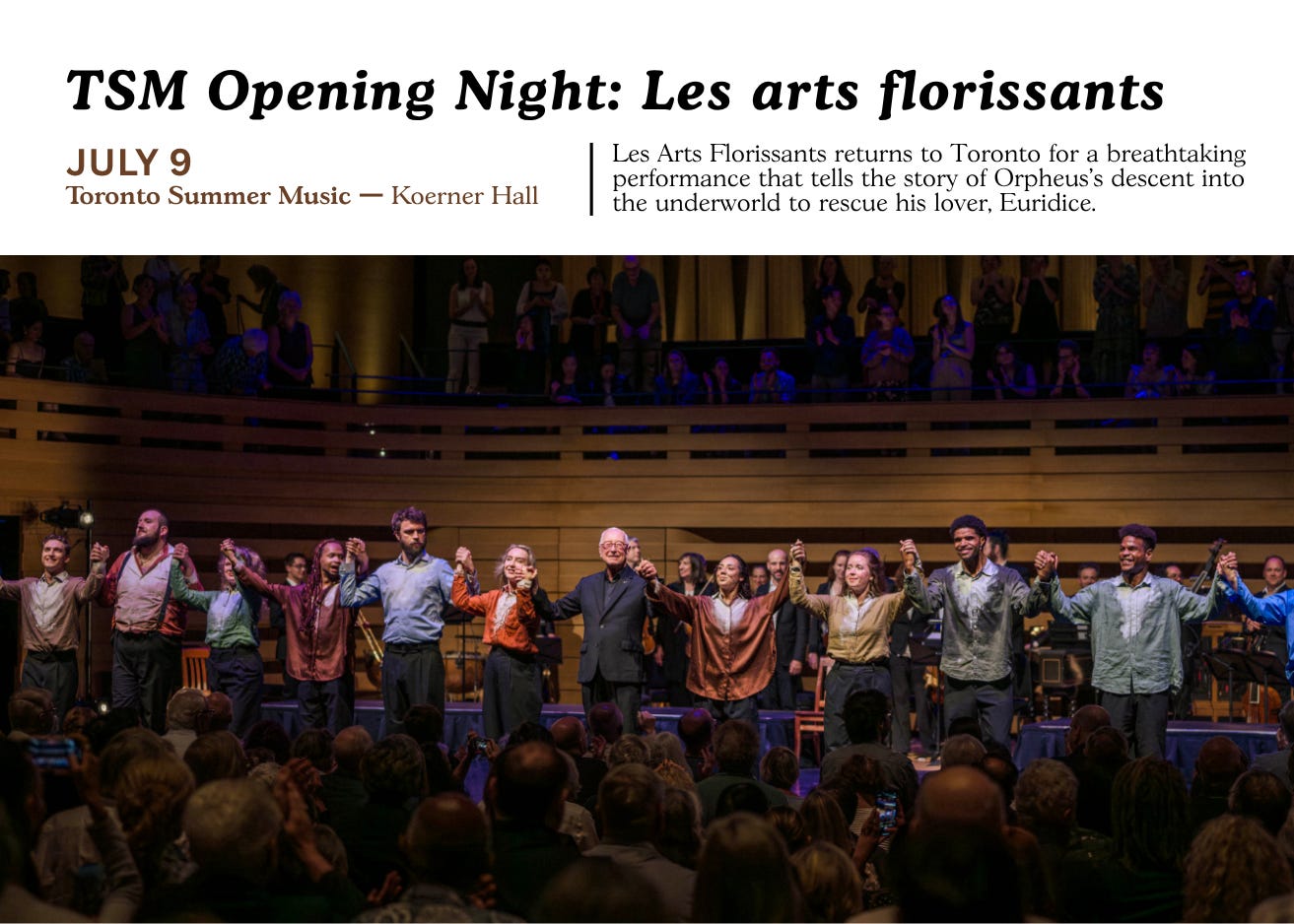
Toronto Summer Music Festival is one of Canada’s leading classical music festivals, bringing internationally renowned artists and emerging performers to Toronto each summer for a citywide celebration of chamber music, orchestral performance, and musical discovery. Running from July 9 till August 1st, Toronto Summer Music opens its 2026 festival with an appearance by the internationally acclaimed Les Arts Florissants, the celebrated French Baroque ensemble renowned for its historically informed performances. Serving as the festival’s opening-night concert, the program sets the tone for the weeks ahead, bringing one of Europe’s defining early music ensembles to Toronto.

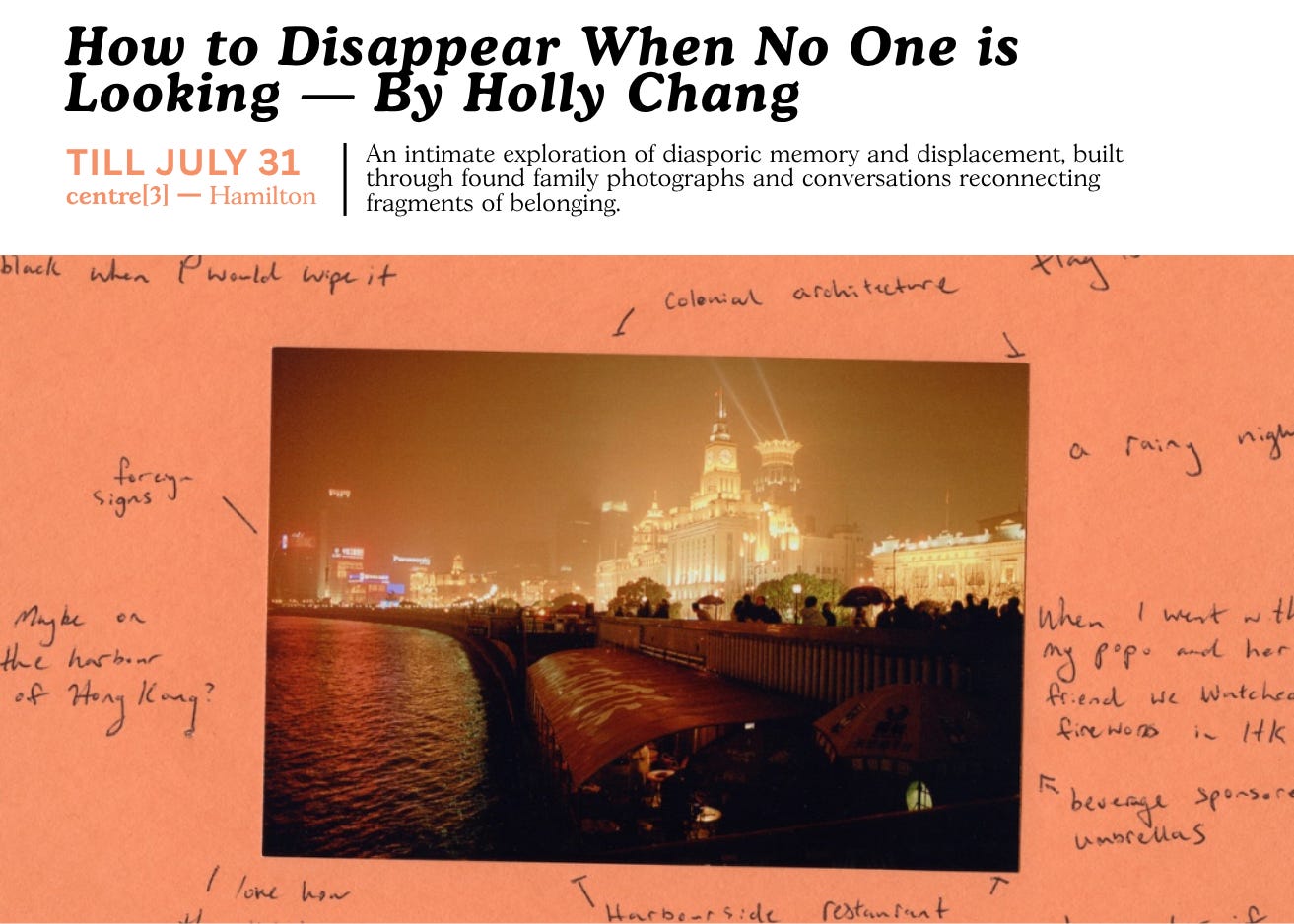
Presented at Centre[3] for Artistic + Social Practice and curated by Sally Frater, How to Disappear When No One Is Looking brings together artists examining what it means to withdraw, evade, or exist at the edges of perception. Through works spanning printmaking and contemporary visual practice, the exhibition considers absence not simply as disappearance, but as a complex social and emotional condition shaped by isolation and the desire to remain unseen.
How to Catch Creation | Till May 17 | TORONTO ─ A contemporary play by Christina Anderson exploring creativity, intimacy, and artistic inheritance through intersecting personal narratives. Nightwood Theatre | Contemporary Theatre
Remnant Record | Till May 20 | HAMILTON ─ A contemporary exhibition examining material memory and archival processes through sculpture, installation, and mixed-media practices. Hamilton Artists Inc. | Contemporary Art
Philip Chiu in Recital — Islands, Legends & Souls | May 21 | THORNBURY ─ Pianist Philip Chiu performs a recital program spanning contemporary and classical repertoire, exploring themes of storytelling, landscape, and musical imagination. Grace United Church | Springtime Live
I was thinking about all of this and all the while I kept walking | Till May 23 | TORONTO ─ A contemporary print-based exhibition exploring movement, memory, and process through experimental approaches to mark-making and materiality. Open Studio | Print / Contemporary Art
Women With Wings | Till May 23 | ST. CATHARINES ─ A multidisciplinary theatre and movement performance exploring women’s stories through ensemble-driven storytelling and live performance. Niagara Artists Centre | Theatre & Performance
Take Rimbaud | Till May 23 | TORONTO ─ A contemporary theatre performance inspired by the life and writings of Arthur Rimbaud, blending poetic text, movement, and experimental staging. Buddies in Bad Times Theatre | Experimental Theatre
How We Are | Till May 25 | HAMILTON ─ A major exhibition of new and recent work by Canadian artist Shary Boyle, featuring sculpture, installation, and drawing that explore themes of identity, transformation, and collective imagination. Art Gallery of Hamilton | Contemporary Art
Dance & Freedom | Till May 30 | TORONTO ─ A four-part movement workshop led by Alireza Keymanesh exploring dance as a form of resistance, embodiment, and collective expression in solidarity with Iran’s ongoing struggle for human rights. Combining improvisation, writing, discussion, live music, and filmed performance, the series invites both dancers and non-dancers into a collaborative creative process. Dancemakers | Citadel Ross Centre for Dance | Contemporary Dance / Workshop
Standing Wave — Jenn E. Norton | Till May 31 | GUELPH ─ A screening and presentation of experimental media work by Jenn E. Norton explores perception, vibration, and the materiality of sound through moving-image practice. Ed Video Media Arts Centre | Screening
Peony Room (no life lasts forever) | Till June 13 | WINDSOR ─ A contemporary solo exhibition by Jess Lincoln exploring materiality, gesture, and spatial relationships through installation and mixed-media practices. Artcite Inc. | Contemporary Art
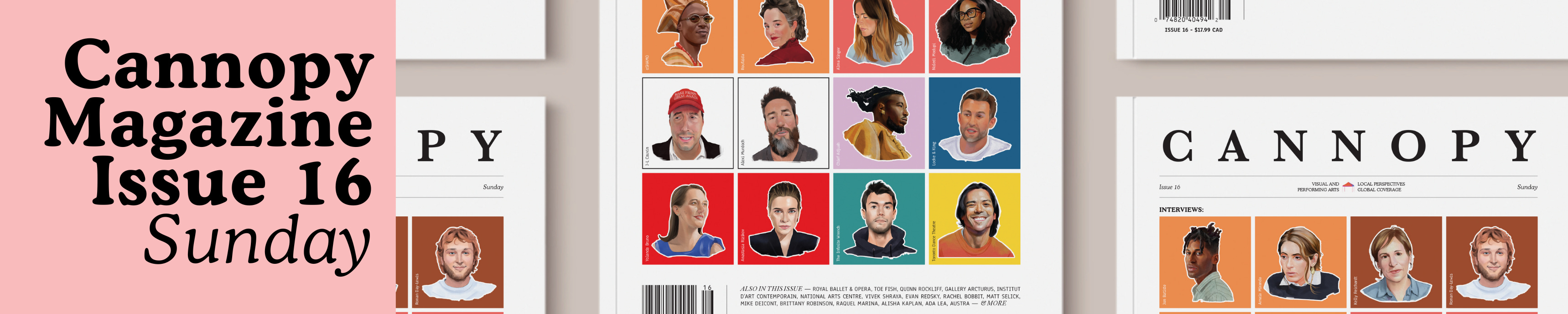
Issue 16 invites you to take a long, slow walk — through boardwalks, backstreets, and creative nooks — where the coffee is hot, the leaves are turning, and your favourite song plays on loop. Across 100 pages, and spanning twelve editorial series, we encounter over 30 artists who redefine presence: from Toronto’s dance and jazz scenes to London’s Afro-fusion rhythms and Paris’s experimental stages.

This series presents scoops and deep-dives on topics in the arts ecosystem across Southern Ontario. From early announcements, to gallery openings, to short opinion pieces, RADARt captures the most exciting happenings on our creative radar.
OPINION: Church Street Could Show Toronto What Cultural Infrastructure Actually Looks Like
By Samir Jaffer
Church Street may be about to get louder, more vibrant, and even more of a communal treasure than it already is.
If approved by Toronto City Council on May 20th, the stretch between Wellesley Street East and Alexander Street will be closed to through traffic from June 19th to August 21st, turning one of the city’s most recognizable queer corridors into a summer pedestrian zone. The east-west streets would remain open, effectively reorienting two busy downtown blocks without causing a sweeping shutdown of the neighbourhood. Designed by urban planner Rodney Chan, the project would leave less space for idling cars, but plenty more needed space for people, patios, performances, seating, street art, DJs, families, visitors, and more.
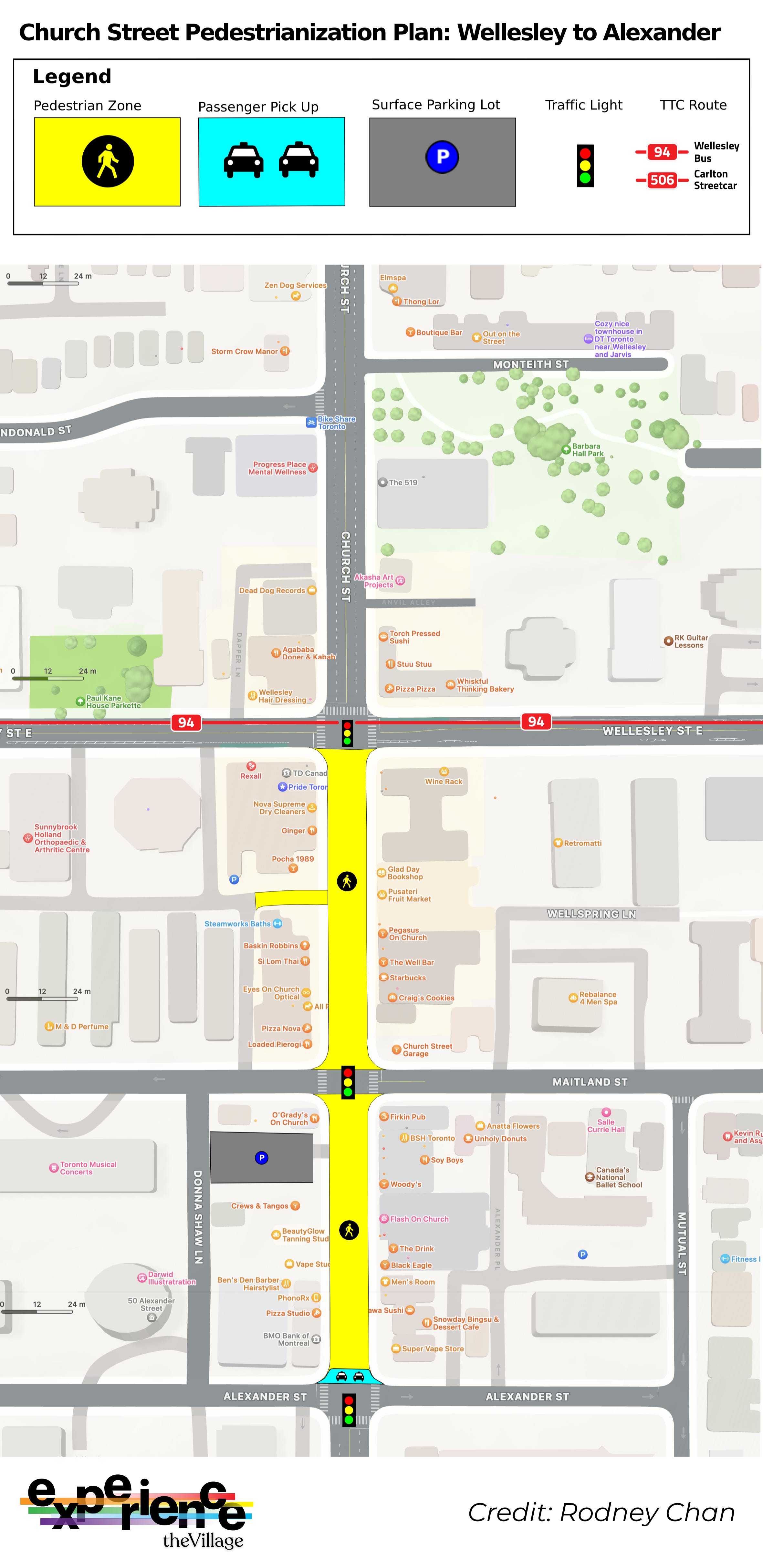
The Village isn’t just an empty canvas waiting for a placemaking consultant to discover it; it already is the home of many memories, nightlife, character, spectacle, and a community history that reaches well beyond whatever a pilot project can capture in nine weeks. That said, the important point of pedestrianisation here is not to manufacture vibrancy, but to stop forcing an already vibrant place to squeeze itself onto sidewalks too narrow for the life that gathers there.
A pedestrianized Church Street would create room for the kinds of cultural activity that often exist just outside the reach of formal venues. According to the project proposal, the street could host activations such as DJ sets, live performances, art exhibits, seating, street art, and other public programming.
For artists across Southern Ontario, the opportunity at hand should register because a pedestrianisation of this magnitude helps address a familiar, pervasive problem. In city after city, artists are asked to enliven and animate communities while being priced out of the rooms where that is usually supposed to happen. Artists are called essential when calls for submission go out, yet they’re treated as expendable when space, budget, and policy are being decided. Pedestrianisation does not solve that on its own, but it does shift the ground a little. It opens up a public-facing platform that is not entirely dependent on landlords, ticket sales, venue minimums, or a bureaucratic, perfectionist-style pursuit of foolproof financials.
Hamilton already shows what this can look like in the context of Southern Ontario. James Street North’s Art Crawl turns the act of walking into an encounter with galleries, music, food, vendors, and the happy unpredictability of public culture. Montreal, the city upon which the Church Street proposal is based, offers an even more developed comparative case in Sainte-Catherine Street East, where summer pedestrianisation in the Village has become part of the city’s cultural identity rather than a novelty.
What’s on the line now, contingent on this project passing through City Council, is whether Church Street’s pedestrianisation can become more than a summer exception. There are practical questions that should not be waved away: security, waste collection, accessibility, deliveries, insurance, traffic management, emergency access, and the basic matter of paying artists and other contributors properly. The extent to which these details are covered are the differentiator between a street that feels genuinely open, catering to public interests, and one that simply makes for a good photo op.
Still, the potential is obvious enough to take seriously. A successful Church Street pilot would not just give one neighbourhood a better summer. It would give Southern Ontario another working example of how streets can be used as cultural infrastructure: flexible, public, imperfect, alive. Not every town or city needs its own version of Church-Wellesley, but more of them could stand to ask where their own blocks of latent possibility are hiding.
Should the pilot succeed, Church Street will offer something more useful than a one-off municipal success story. It will offer proof that culture does not always need a new building, a new district, or a new slogan. Sometimes, it needs a few blocks, a little trust, and the decision to let people linger.
The Arrival of Spring on Vinyl
What can Beethoven’s Sixth Symphony teach us about acceptance?

In the second instalment of Notes From the Recording, Cannopy turns toward Beethoven’s Pastoral Symphony through the lens of vinyl culture featuring a recording by the Toronto Symphony Orchestra. Moving between personal listening reflections and broader musical history, this instalment considers how recordings of the Sixth Symphony have long wrestled with Beethoven’s own resistance to overt programmatic storytelling, while also reflecting on the nostalgia and visual language that surround classical records themselves. As with the series’ first entry, this entry treats the act of listening not simply as consumption, but as a lived ritual shaped by memory, collecting, and the physicality of recorded sound.

Cannopy Kudos is our shout-out for praiseworthy artists, organizations, and patrons whose good work is contributing to making Ontario’s arts ecosystem a healthier and more inclusive place to be.
If there’s someone that you’d like to give a shoutout to, write a letter to the editor in 200 words or less. Selected entries will receive a free 1-year subscription to The Cannopy Newsletter, and be entered to win special prizes each month. Send your entries to team(at)cannopy.ca
Inhabit Books
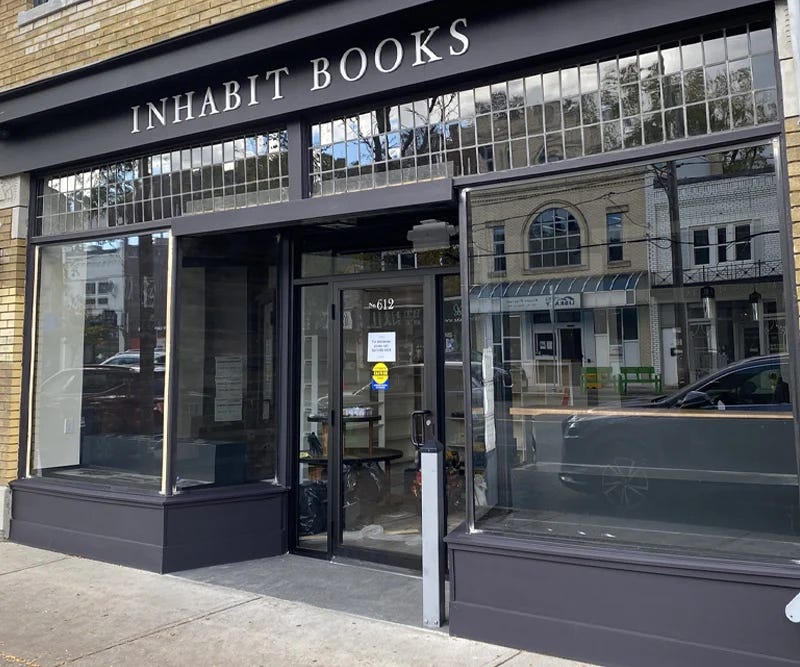
In the pursuit of creating a more inclusive environment, in any walk of life, it can be easy to slip into platitude-driven action or to dilute the connection a people has with their land and the ethos that makes a cultural history and its products distinct. The line between earnest, resonant representation and artwashing is an exceedingly fine one, and the latter is usually what gets splattered across headlines and news tickers. Consequently, quieter proprietors with genuine connections to the cultures they represent get sidelined. In midtown Toronto, however, a new page has been turned.
Inhabit Books and the Piujut Gallery, two interconnected brick-and-mortar spaces, are first-hand representatives, patrons, and disseminators of Nunavut art. Under the Inuit-owned Inhabit Media umbrella, these two establishments are a sorely needed outpost for Inuit culture. Needed not only for the cultural enrichment they provide to non-Inuit folks but, importantly, for the preservation and emboldenment of Inuit culture. The vast majority of books on sale at Inhabit Books are available in English, Inuktitut, and Inuinnaqtun, ensuring that language and lineage are honoured and platformed by people with the right interests at heart. The adjoining Piujut Gallery is a treasure trove of handcrafted work, directly from the communities the works themselves are grounded by—with pieces that are purchasable in-house while free to the public to see. Without cultural hubs like Inhabit Books and the Piujut Gallery, we risk losing sight of our roots, our circumstances, and the things that tie us together. Kudos!

Join AtG’s Circle of Friends


Community over everything. That’s the spirit behind Against the Grain Theatre’s Circle of Friends. Part fan club, part insider pass, the Circle brings opera lovers of all ages a little closer to the creative life of one of Canada’s most adventurous independent opera companies. Members enjoy behind-the-curtain access to AtG’s programming, exclusive perks, and opportunities to turn the audience experience into something more participatory.

Education Course Proposal Call | by May 25 | TORONTO ─ Artists and educators are invited to propose community-based courses and workshops in visual art, writing, performance, and media arts for participants with lived experience of mental health and addiction. Selected facilitators will lead courses as part of Workman Arts’ education programming. Employer: Workman Arts | Pay: Facilitator fees provided
Ushers | by May 25 | TORONTO ─ Provide front-of-house support for performances, festivals, and cultural events, assisting audiences with seating, accessibility, and visitor services across Harbourfront Centre venues. Employer: Harbourfront Centre | Pay: ~$18–$20/hour
Senior Manager, Marketing Communications and Visitor Experience | By May 29 | TORONTO ─ Lead marketing strategy, communications planning, and visitor experience initiatives for a major contemporary art gallery, overseeing audience engagement, branding, and public-facing operations. Employer: The Power Plant Contemporary Art Gallery | Pay: $80,000–$95,000/year
